

3I/ATLAS Spinning? 5 Shocking Claims About the Interstellar Comet
Introduction
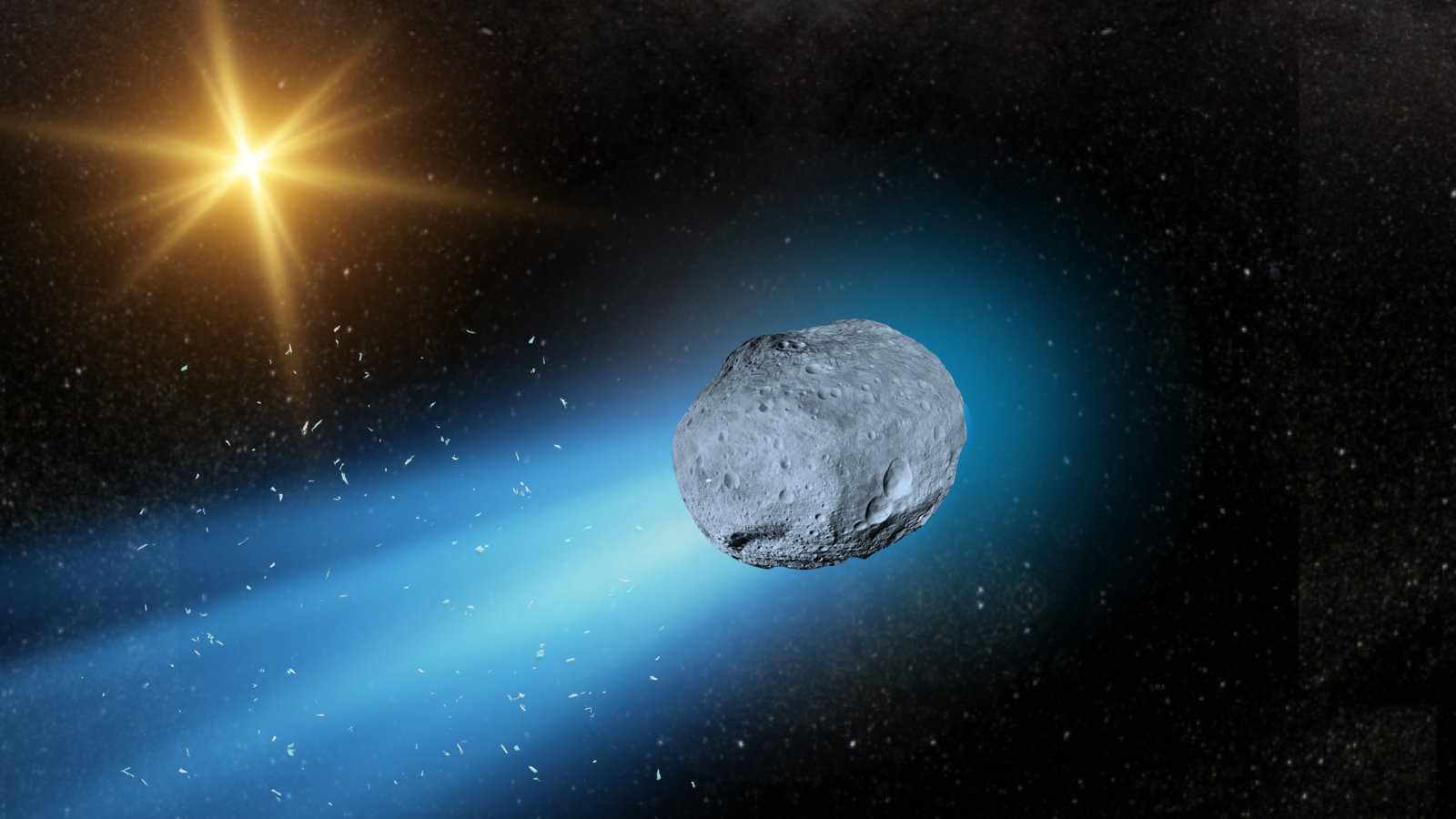
The interstellar visitor 3I/ATLAS is making waves—not just for being the third confirmed object from beyond our Solar System, but now for purported spinning behaviour. In recent days, amateur astrophotography clips and social-media posts have viral-ly claimed the comet is rotating, showing dust rings and shifting coma patterns. Some are calling it “odd,” others outright ask if it’s really a comet. But what’s the truth? Let’s dive deep into the claims, the evidence, what scientists are saying—and what remains unanswered.



1. Claim #1: “3I/ATLAS is visibly spinning”
What’s been shared
-
Viral posts on X (formerly Twitter) show stacked images and short videos of the comet, claiming a rotating motion of the coma or dusty halo. The Economic Times+1
-
Some describe loop-like dust rings or circular patterns forming around the comet’s nucleus. The Economic Times
-
A popular claim: “Amateur astrophotographer Ray’s Astrophotography captured a video at 9 pm EST showing a spinning structure.” The Economic Times
What scientists say
-
The mainstream scientific commentary emphasises that none of these spinning claims are verified. They may be imaging artefacts, aligning of coma structure, or visual illusions. The Times of India+1
-
In fact, one peer-review study (pre-perihelion) reported a spin period of about 16.16 ± 0.01 hours for 3I/ATLAS. arXiv+1
My take
It’s plausible the nucleus of 3I/ATLAS is rotating (as is common for comets), but the dramatic “spinning dust ring” visuals should be treated with caution. Until high-resolution, time-series imaging confirms a clear rotation axis, the claim remains speculative.
2. Claim #2: “Strange dust-ring or shell structure around the comet”
What’s been observed
-
Posts claim that the dust around the comet is forming detached shells, or rings that imply a structured outflow rather than a typical comet tail. The Economic Times+1
-
Some amateur imagery suggests changing coma shape, possibly indicating non-uniform outgassing or rotational modulation of dust ejection.
Scientific context
-
Observations of 3I/ATLAS show its coma and dust environment evolving: photometry shows changes in colour (reddening to near-solar) and dust production. arXiv
-
There is no scientifically published paper yet that confirms a “ring structure” or shell in the dust as a result of rotation or exotic behaviour.
My take
Dust shells or rings aren’t unheard of in comets (outburst events can cause sudden shell-like features). But to jump from “shell” to “spinning alien object” is a stretch. It needs peer-review imaging and dynamics to support it.
3. Claim #3: “3I/ATLAS may not even be a normal comet”
The speculative angle
-
Some popular commentary is asking: if 3I/ATLAS is spinning unusually, could it be more than just a comet? Are we looking at something artificial? New York Post+1
-
One prominent voice in this line is Avi Loeb, who argued that some of the released images were too fuzzy, and that the possibility of non-natural origin should not be dismissed. New York Post
The scientific consensus
-
Agencies like NASA have stated clearly: all current data point to 3I/ATLAS being a natural comet, albeit an interstellar one. WIRED+1
-
The polarimetric and photometric studies published show characteristics consistent with cometary bodies: e.g., the negative polarisation branch, dust properties etc. arXiv+1
My take
The “alien spacecraft” idea will always make headlines—but as of now, there is no credible evidence to support it. The more probable scenario: we’re looking at an unusual, but natural, interstellar comet whose behaviour highlights the diversity of such objects.
4. Claim #4: “Rotation, tail change and brightness anomalies coincide with perihelion approach”
What’s happening
-
Observations: 3I/ATLAS changed colour (from reddish to near-solar), and its dust production (coma cross-section) shifted behaviour as it got closer to the Sun. arXiv
-
The comet made a close pass by Mars on 3 October 2025, and multiple spacecraft (Mars orbiters) snapped images which revealed the dust/gas environment around 3I/ATLAS. NASA Jet Propulsion Laboratory (JPL)+1
-
The claims of spinning or unusual structures appear roughly at the same time as these changes.
What this suggests
-
When a comet approaches the Sun, increased solar heating triggers more volatile release, dust jets, shifting geometry—all of which can mimic the appearance of “rotation” or shifting rings.
-
Viewing geometry matters: how the comet’s tail, coma and jets align with our line of sight can produce visual illusions of rotation or swirling.
My take
The coincidence of dust/colour/structural change near perihelion suggests the likely explanation is natural cometary activity plus complex geometry, rather than something exotic. The “spinning claims” may be the effect of rapid changes in outgassing directions rather than the nucleus spinning like a top.
5. What remains unexplained – and the “urgent watch list”
Open questions
-
Rotation axis and period: While a ~16 hour period was claimed by one study, confirming the axis orientation is pending.
-
Dust and jet morphology: The ring/shell claims need high-resolution imaging to confirm whether they are real or artefacts.
-
Non-gravitational acceleration: Interstellar comets sometimes show deviations in their trajectories due to outgassing; precise measurements of 3I/ATLAS are ongoing.
-
Composition and origin: How does 3I/ATLAS compare to the other interstellar object 2I/Borisov or to distant Solar System comets? Its polarimetric signature was unusual. arXiv
What to watch for
-
Upcoming data releases from NASA and ESA missions: High-res images (e.g., from HiRISE on Mars Reconnaissance Orbiter) could clarify features. NASA Jet Propulsion Laboratory (JPL)+1
-
Amateur astrophotography stacking and time-series might reveal jet rotation or nucleus rotation clearly.
-
Further modelling of dust dynamics could explain the “rings” or shells without invoking exotic causes.
Conclusion
Yes, the focus word 3I/ATLAS is stirring up headlines—and rightly so, because this interstellar comet offers a rare chance to study material from beyond our Solar System. But when it comes to the claim “3I/ATLAS is spinning”, the current evidence is intriguing but not conclusive. Many of the visual claims likely stem from natural cometary activity, changing geometry, and evolving dust/jet behaviour rather than something extraordinary.
Nevertheless, the opportunity is real. As more high-quality data come in, we may well refine our understanding of this object—and perhaps refine our understanding of interstellar visitors in general. Until then—stay curious, check the data, and treat sensational claims with healthy scientific scepticism.
One comment